Low Vision vs. Blindness — What Nurses in California and Oregon Need to Know

Low Vision vs. Blindness — What Nurses in California and Oregon Need to Know

Understanding the difference between low vision and blindness is essential for nurses in California and Oregon providing patient-centered, culturally competent care. These terms are often used interchangeably, but they describe distinct experiences that directly impact how patients navigate healthcare, communicate, and maintain independence.

What Is Low Vision?

Low vision refers to fuzzy vision measured as 20/40-20/100 on the eye chart. This significant visual impairment cannot be fully corrected with glasses, contact lenses, medication, or surgery—but still allows for reading print with magnification.

Some people, especially those with AMD may not benefit from magnification.

Patients with low vision may experience:

  • Blurred or reduced central vision

  • Loss of peripheral (side) vision

  • Difficulty seeing in low light

  • Reduced contrast sensitivity

Why This Matters

Patients with low vision often rely on:

  • Magnification tools

  • Bright or controlled lighting

  • Visual cues combined with other senses

They may appear fully sighted but still face substantial barriers in clinical settings.

What Is Blindness?

Blindness exists on a spectrum including low vision. Many patients who are legally blind may be able to read standard print yet, may need good contrast or, bold or, only able to see on the computer. And also may have limited visual fields which may make it difficult to find or raise and where to sign on a form. While others may have low vision that reaches a point where magnification does not help. Statistics state that about 20% of those who are legally blind are completely blind with no light perception. It is also worth noting that many of these conditions are progressive and levels of training varies widely making your response needs to fit their presentation.

Clinical blindness may include:

  • Very limited visual acuity

  • Tunnel vision

  • Significant blind spots

  • Light perception only

Why This Matters

Assuming total vision loss can lead to over-assistance, while assuming full vision can create safety risks. Nurses in California and Oregon must assess each patient’s functional vision individually. Learning different strategies will make you more prepared and able to keep your clients safe and cared for.

Why This Matters for Nurses in California and Oregon

Nurses in California and Oregon are often the first point of contact in care. Understanding low vision vs. blindness helps:

  • Improve patient safety

  • Reduce miscommunication

  • Build trust and rapport

  • Deliver more equitable care

As the population ages, the number of patients with vision loss will continue to grow—making this knowledge increasingly critical.

Continuing the Mission of Access and Understanding

Adaptability for Life’s cultural competence - ethics continuing education courses provide engaging and practical skills in supporting their clients with vision/hearing loss.

Approvals - Accreditations:

OHA - Oregon Health Authority - Cultural Competence CE
CEP #18180 CA Board of Registered Nursing, Continuing Education Provider
NASW-OR Nat. Assoc. of Social Workers - Oregon Cultural Competence CE
CRCC - Commission on Rehabilitation Counselors Certification - Ethics CE

Who these courses are helpful for:

Nurses, Psychologist, LCSW, LFMT, PT, OT, SLP, ND, NP, PA, MD, DDS, LPC, Chiropractor, License Professional Counselor, Marriage and Family Therapist, Dentist, Dental Technologist, Dietitian, Emergency Medical Service Provider, Home Care Worker, Lactation Consultant, Long Term Care Administrator, Massage Therapist, Medical Imager, Midwife, Naturopathic Doctor, Occupational Therapist, Optometrist, Pharmacist, Polysomnographic Technologist/Respiratory Therapist, Social Workers, Caregivers and Families.

  • For those seeking to enhance their skills in communicating with those who have vision or hearing loss, consider enrolling.

2-Hour Cultural Competence CE: Effective Communication with Clients Who Are Hard of Hearing
4-Hour Cultural Competence and Ethics CE: Understanding the Diversity of Legal Blindness, Impacts & Solutions
6-Hour Cultural Competence and Ethics CE: Providing Culturally Competent Healthcare for Those Aging with Dual Sensory Impairments

Each course blends over 25 years of experience in rehabilitation counseling and disability services with lived insight and real-world examples. You’ll walk away with tools that help prevent social isolation, improve connection and communication, and foster hope—even in the face of progressive sensory loss.

What You’ll Gain

  • Strategies to prevent social isolation and despair

  • Tools to support clients experiencing progressive loss

  • Skills to improve communication and connection

  • Easy, low- or no-cost accessibility techniques

  • Real-world examples you can apply immediately

About the Instructor

Deb Marinos, MS, CRC, LPC, is a Certified Rehabilitation Counselor, Oregon Licensed Professional Counselor, and CMBM Mind-Body Skills Group Facilitator. She brings decades of teaching experience with health care professionals and other working with individuals navigating sensory loss and disability. Her courses are designed to be interactive, helpful, and will give you more comfort in your work.

Take the Next Step

If you’re ready to strengthen your skills, deepen your empathy, and make your practice more inclusive—join Deb and Olaf on this journey.

👉 Explore the Cultural Competence & Ethics accredited continuing education courses and sign up today at Adaptability for Life

Adaptability for Life LLC
21887 SW Sherwood Blvd. STE C
Sherwood, OR 97140
deb@adaptabilityforlife.com

You Can Avoid Common Mistakes as Healthcare Providers While Treating Patients with Vision Loss - Blindness.

You Can Avoid Common Mistakes as Healthcare Providers While Treating Patients with Vision Loss - Blindness.

Providing care for individuals with vision loss requires more than clinical expertise—it requires awareness, communication skills, and cultural competence. Many healthcare providers, even with the best intentions, make common mistakes when working with patients who are blind or visually impaired.These missteps are often subtle, rooted in assumptions or lack of training, but they can significantly impact patient trust, safety, and overall quality of care.

For providers committed to delivering equitable and patient-centered care, understanding and correcting these mistakes is essential.

Common Mistakes Healthcare Providers Make

Mistake #1: Assuming Blindness Means Total Vision Loss

One of the most common misconceptions is that blindness equals complete darkness. In reality, most individuals who are legally blind retain some usable vision.

Assuming total blindness can lead to:

  • Over-assisting patients

  • Underestimating their independence

  • Poor communication strategies

What to Do Instead Ask:

  • “What helps you see best in this environment?”

  • “How would you prefer I guide you?”

Mistake #2: Speaking to a Companion Instead of the Patient

It is not uncommon for providers to direct communication toward a family member or caregiver rather than the patient.

Why This Matters

  • It undermines patient autonomy

  • It can feel dismissive or disrespectful

  • It weakens trust in the provider

What to Do Instead:

  • Speak directly to the patient at all times

  • Maintain a natural tone and pace

  • Include companions only when appropriate or requested

Mistake #3: Failing to Describe the Environment

Healthcare environments can be unfamiliar and overwhelming, especially for patients with limited vision.

Why This Matters

Without orientation, patients may feel:

  • Disoriented

  • Anxious

  • Less in control of their surroundings

What to Do Instead is to provide a brief orientation:

  • “You’re in an exam room. There’s a chair to your left and equipment on the right.”

  • “I’m stepping out now, but I’ll return shortly.”

Mistake #4: Providing Physical Assistance Without Consent

Grabbing or guiding a patient without asking—even with good intentions—can be disorienting or unsafe.

What to Do Instead

  • Ask: “Would you like assistance?”

  • If yes, offer your arm rather than taking theirs

  • Allow the patient to guide how support is provided

Respecting personal space is key to maintaining dignity.

Mistake #5: Overlooking the Importance of Assistive Tools

Assistive devices such as white canes, magnifiers, or mobile technology are essential tools for independence.

Ignoring or mishandling these tools can:

  • Disrupt navigation

  • Increase risk of injury

  • Signal lack of understanding

What to Do Instead

  • Treat assistive tools as extensions of the patient

  • Never move them without permission

  • Ask how they can support care if relevant

Mistake #6: Ignoring the Emotional Impact of Vision Loss

Vision loss is not only a physical condition—it can also affect:

  • Identity

  • Confidence

  • Mental health

  • Relationships and career

What to Do Instead, Create space for open conversation:

  • “How has your vision been affecting your daily life?”

  • “Is there anything that’s been particularly challenging for you?”

This supports more holistic, patient-centered care.

Treating Patients with Vision Loss: A Culturally Competent Approach

Culturally competent care recognizes that vision loss is a lived experience shaped by more than medical diagnosis. It involves understanding how individuals navigate the world, maintain independence, and experience social perceptions.

Key Principles for Providers:

  • Ask rather than assume

  • Support independence and autonomy

  • Communicate clearly and respectfully

  • Adapt care to the individual, not the diagnosis

Patients with vision loss are not defined by limitations—they are individuals with adaptive skills, preferences, and unique experiences.

Improving awareness and communication:

  • Reduces medical errors

  • Enhances patient trust

  • Improves outcomes

  • Supports equitable, inclusive care

Continuing the Mission of Access and Understanding

Adaptability for Life’s cultural competence - ethics continuing education courses provide engaging and practical skills in supporting their clients with vision/hearing loss.

Approvals - Accreditations:

OHA - Oregon Health Authority - Cultural Competence CE
CEP #18180 CA Board of Registered Nursing, Continuing Education Provider
NASW-OR Nat. Assoc. of Social Workers - Oregon Cultural Competence CE
CRCC - Commission on Rehabilitation Counselors Certification - Ethics CE

Who these courses are helpful for:

Nurses, Psychologist, LCSW, LFMT, PT, OT, SLP, ND, NP, PA, MD, DDS, LPC, Chiropractor, License Professional Counselor, Marriage and Family Therapist, Dentist, Dental Technologist, Dietitian, Emergency Medical Service Provider, Home Care Worker, Lactation Consultant, Long Term Care Administrator, Massage Therapist, Medical Imager, Midwife, Naturopathic Doctor, Occupational Therapist, Optometrist, Pharmacist, Polysomnographic Technologist/Respiratory Therapist, Social Workers, Caregivers and Families.

  • For those seeking to enhance their skills in communicating with those who have vision or hearing loss, consider enrolling.

2-Hour Cultural Competence CE: Effective Communication with Clients Who Are Hard of Hearing
4-Hour Cultural Competence and Ethics CE: Understanding the Diversity of Legal Blindness, Impacts & Solutions
6-Hour Cultural Competence and Ethics CE: Providing Culturally Competent Healthcare for Those Aging with Dual Sensory Impairments

Each course blends over 25 years of experience in rehabilitation counseling and disability services with lived insight and real-world examples. You’ll walk away with tools that help prevent social isolation, improve connection and communication, and foster hope—even in the face of progressive sensory loss.

What You’ll Gain

  • Strategies to prevent social isolation and despair

  • Tools to support clients experiencing progressive loss

  • Skills to improve communication and connection

  • Easy, low- or no-cost accessibility techniques

  • Real-world examples you can apply immediately

About the Instructor

Deb Marinos, MS, CRC, LPC, is a Certified Rehabilitation Counselor, Oregon Licensed Professional Counselor, and CMBM Mind-Body Skills Group Facilitator. She brings decades of teaching experience with health care professionals and other working with individuals navigating sensory loss and disability. Her courses are designed to be interactive, helpful, and will give you more comfort in your work.

Take the Next Step

If you’re ready to strengthen your skills, deepen your empathy, and make your practice more inclusive—join Deb and Olaf on this journey.

👉 Explore the Cultural Competence & Ethics accredited continuing education courses and sign up today at Adaptability for Life

Adaptability for Life LLC
21887 SW Sherwood Blvd. STE C
Sherwood, OR 97140
deb@adaptabilityforlife.com
What a Legally Blind Person Can See — And What Healthcare Providers Need to Understand

What a Legally Blind Person Can See — And What Healthcare Providers Need to Understand

In a New York Times Opinion video, “What a Legally Blind Person Can See,” offers a powerful reframing and understanding of blindness—blindness not as total darkness, but as a spectrum of visual experience. Through the story of Yvonne Shortt, a legally blind artist living with retinitis pigmentosa (RP), the video challenges common assumptions and provides meaningful insight for healthcare professionals.

For providers committed to culturally competent care, this perspective is insightful. Vision loss is not just a clinical condition—it is a lived, evolving experience that affects communication, autonomy, identity, and trust.

What Does “Legally Blind” Actually Mean?

Legal blindness does not equal total blindness. In fact, approximately 85% of people who are legally blind retain some usable vision. This vision can vary dramatically depending on type of vision loss:

  • Lighting conditions

  • Distance from objects

  • Time of day

  • Fatigue

  • Position within their field of vision

For individuals like Yvonne with RP, vision is:

  • Partial (a narrow cone of clarity)

  • Inconsistent (clear in one moment, unclear the next)

  • Fragmented (seeing parts of objects rather than whole forms)

She describes seeing someone as pieces—perhaps a foot, a torso, or a hand—depending on positioning. Over time, peripheral vision loss creates a “tunnel vision” effect, often with blind spots that develop gradually and go unnoticed until they significantly impact daily life.

Adaptation Is Skill, Not Deficit

What’s critical for providers to understand is that adaptation happens alongside decline. Patients are not simply “losing function”—they are actively learning new ways to navigate their world. Yvonne’s story highlights how individuals with vision loss develop sophisticated strategies, including:

  • Scanning: Pausing and mentally mapping a space

  • Sensory compensation: Relying more on touch, sound, and spatial awareness

  • Assistive tools: Using phones, lighting aids, or white canes

  • Environmental awareness: Interpreting subtle cues like airflow, sound shifts, or textures

These adaptations are not signs of limitation—they are signs of resilience, intelligence, and agency.

Practical Tips for Healthcare Providers

To provide effective, ethical, and culturally competent care, providers must move beyond assumptions and adopt intentional practices.

1. Avoid Visual Assumptions: Do not assume a patient can or cannot see based on appearance. Instead ask:
- “What helps you see best in this environment?”
- “Do you prefer verbal guidance or physical cues?”

2. Optimize the Environment: Small changes can significantly improve accessibility:

- Ensure consistent, non-glare lighting
-
Reduce visual clutter in exam rooms
- Keep equipment in predictable locations
-
Verbally describe any changes in the environment

3. Communicate Clearly and Directly: Always introduce yourself verbally

-
Speak directly to the patient (not a companion)
- Use specific language (“The chair is two steps to your right”)
- Avoid vague cues like “over there”

4. Respect Autonomy with Mobility Tools: The white cane, for example, is not just a tool—it can carry emotional and social weight.

- Patients may delay using it due to:
- Fear of stigma
- Concerns about independence
- Professional or relational anxiety

5. Recognize Emotional and Identity Impacts: Vision loss is not just physical—it can affect:

- Career identity
- Relationships
- Confidence
- Mental health

Your role is not to push—but to support informed, empowered choices.

Continuing the Mission of Access and Understanding

Adaptability for Life’s cultural competence - ethics continuing education courses provide engaging and practical skills in supporting their clients with vision/hearing loss.

Approvals - Accreditations:

OHA - Oregon Health Authority - Cultural Competence CE
CEP #18180 CA Board of Registered Nursing, Continuing Education Provider
NASW-OR Nat. Assoc. of Social Workers - Oregon Cultural Competence CE
CRCC - Commission on Rehabilitation Counselors Certification - Ethics CE

Who these courses are helpful for:

Nurses, Psychologist, LCSW, LFMT, PT, OT, SLP, ND, NP, PA, MD, DDS, LPC, Chiropractor, License Professional Counselor, Marriage and Family Therapist, Dentist, Dental Technologist, Dietitian, Emergency Medical Service Provider, Home Care Worker, Lactation Consultant, Long Term Care Administrator, Massage Therapist, Acupuncturists, Medical Imager, Midwife, Naturopathic Doctor, Occupational Therapist, Optometrist, Pharmacist, Polysomnographic Technologist/Respiratory Therapist, Social Workers, Caregivers and Families.

  • For those seeking to enhance their skills in communicating with those who have vision or hearing loss, consider enrolling.

2-Hour Cultural Competence CE: Effective Communication with Clients Who Are Hard of Hearing
4-Hour Cultural Competence and Ethics CE: Understanding the Diversity of Legal Blindness, Impacts & Solutions
6-Hour Cultural Competence and Ethics CE: Providing Culturally Competent Healthcare for Those Aging with Dual Sensory Impairments

Each course blends over 25 years of experience in rehabilitation counseling and disability services with lived insight and real-world examples. You’ll walk away with tools that help prevent social isolation, improve connection and communication, and foster hope—even in the face of progressive sensory loss.

What You’ll Gain

  • Strategies to prevent social isolation and despair

  • Tools to support clients experiencing progressive loss

  • Skills to improve communication and connection

  • Easy, low- or no-cost accessibility techniques

  • Real-world examples you can apply immediately

About the Instructor

Deb Marinos, MS, CRC, LPC, is a Certified Rehabilitation Counselor, Oregon Licensed Professional Counselor, and CMBM Mind-Body Skills Group Facilitator. She brings decades of teaching experience with health care professionals and other working with individuals navigating sensory loss and disability. Her courses are designed to be interactive, helpful, and will give you more comfort in your work.

Take the Next Step

If you’re ready to strengthen your skills, deepen your empathy, and make your practice more inclusive—join Deb and Olaf on this journey.

👉 Explore the Cultural Competence & Ethics accredited continuing education courses and sign up today at Adaptability for Life

Adaptability for Life LLC
21887 SW Sherwood Blvd. STE C
Sherwood, OR 97140
deb@adaptabilityforlife.com
A Nurse’s Practitioners Guide to Communicating with Older Patients

A Nurse’s  Practitioners Guide to Communicating with Older Patients

Adaptability for Life’s cultural competence - ethics continuing education courses focus on helping nurses, psychologists, dentists, doctors, chiropractors, therapists, counselors, social workers, dietitians, and other healthcare professionals and families better serve individuals with vision or hearing loss, blindness, deafness and combinations of sensor loss through culturally competent, practical, and engaging continuing education.

Read More

Culturally Competent Naturopathic Care: Supporting Patients with Hearing and Vision Loss

As a naturopathic doctor, your role extends beyond treating illness — you nurture the whole person. But when your patients live with hearing or vision loss, even the most compassionate care can fall short if communication isn’t clear. Progressive sensory loss can compound stress, isolation, and confusion — especially in adults managing multiple chronic conditions.

Understanding how dual sensory loss (DSL) affects your patients’ lives and adapting your communication approach are vital steps toward truly holistic, culturally competent care.

The Overlooked Impact of Hearing and Vision Loss

Hearing and vision loss are often invisible, gradual, and misunderstood — both by healthcare providers and patients themselves. Yet, they significantly affect everything from medication adherence to appointment follow-through. A patient might nod as if they understand, but later feel anxious when they realize they missed instructions or couldn’t read a supplement label.

This isn’t simply a communication issue — it’s an ethical and cultural competence issue. Providing accessible, inclusive care supports the naturopathic principles of Docere (doctor as teacher) and Tolle Totum (treating the whole person).

Practical Tools for Accessible, Low-Cost Care

Here are simple, effective ways to reduce barriers for patients with sensory loss:

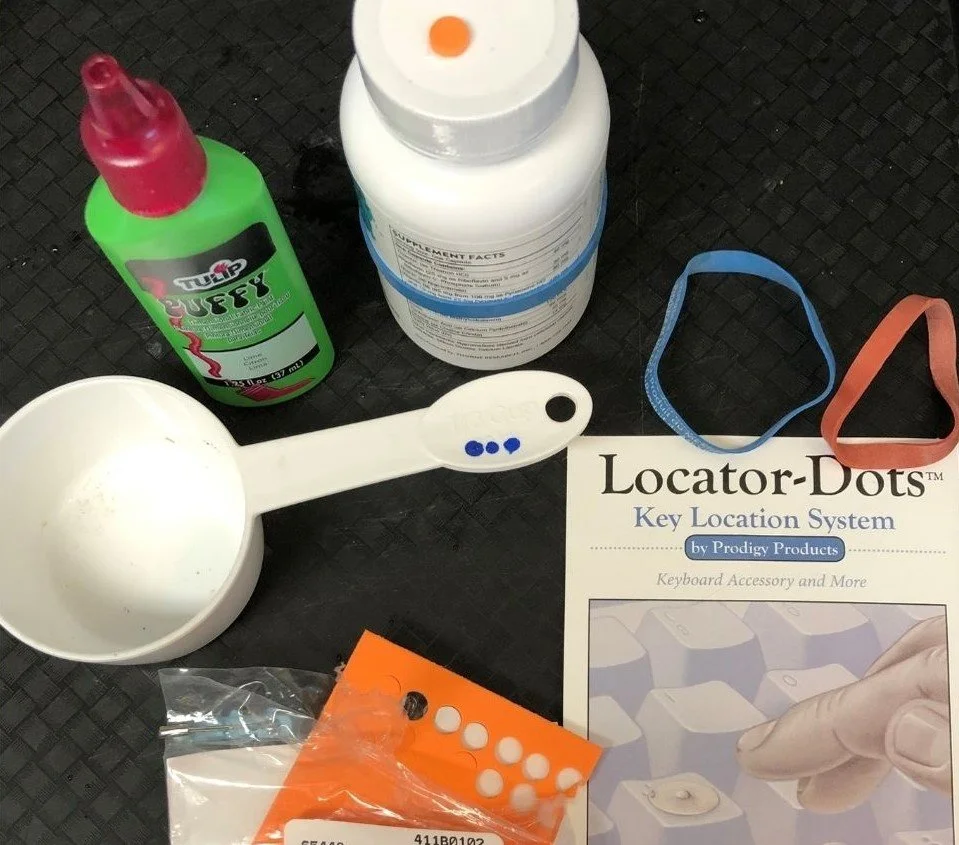
  • Use tactile labeling: One bump dot, colored sticker, or rubber band around a bottle can signal once-daily dosing; two can mean twice daily. This helps patients stay organized and confident.

  • Leverage technology: Encourage use of audio or RFID tags to help identify supplements and prescriptions. While apps like the free Be My Eyes AI app allows users to hear what’s printed on bottles and labels, care must be taken to double check for accuracy.

  • Simplify your environment: Provide several different ways for clients to access information such as: auditory descriptions, written or sensory orientation cues in your clinic — such as sounds, tactile labelling, bold clear consistent signage, maps, or use verbal guidance that is specific. Such as the scale is at 2 o’clock and two feet away.

  • Educate caregivers if appropriate: Many people with vision/hearing loss are very independent given access to information. When necessary Involve family or support staff to reinforce safe supplement use and appointment reminders.

For a detailed overview, the American Foundation for the Blind’s Guidelines for Prescription Labeling provides excellent best practices for accessible medication management.

Continuing the Mission of Access and Understanding

Adaptability for Life’s cultural competence - ethics continuing education courses provide engaging and practical skills in supporting their clients with vision/hearing loss.

Approvals - Accreditations:

OHA - Oregon Health Authority - Cultural Competence CE
CEP #18180 CA Board of Registered Nursing, Continuing Education Provider
NASW-OR Nat. Assoc. of Social Workers - Oregon Cultural Competence CE
CRCC - Commission on Rehabilitation Counselors Certification - Ethics CE

Who these courses are helpful for:

Nurses, Psychologist, LCSW, LFMT, PT, OT, SLP, ND, NP, PA, MD, DDS, LPC, Chiropractor, License Professional Counselor, Marriage and Family Therapist, Dentist, Dental Technologist, Dietitian, Emergency Medical Service Provider, Home Care Worker, Lactation Consultant, Long Term Care Administrator, Massage Therapist, Medical Imager, Midwife, Naturopathic Doctor, Occupational Therapist, Optometrist, Pharmacist, Polysomnographic Technologist/Respiratory Therapist, Social Workers, Caregivers and Families.

  • For those seeking to enhance their skills in communicating with those who have vision or hearing loss, consider enrolling.

2-Hour Cultural Competence CE: Effective Communication with Clients Who Are Hard of Hearing
4-Hour Cultural Competence and Ethics CE: Understanding the Diversity of Legal Blindness, Impacts & Solutions
6-Hour Cultural Competence and Ethics CE: Providing Culturally Competent Healthcare for Those Aging with Dual Sensory Impairments

Each course blends over 25 years of experience in rehabilitation counseling and disability services with lived insight and real-world examples. You’ll walk away with tools that help prevent social isolation, improve connection and communication, and foster hope—even in the face of progressive sensory loss.

What You’ll Gain

  • Strategies to prevent social isolation and despair

  • Tools to support clients experiencing progressive loss

  • Skills to improve communication and connection

  • Easy, low- or no-cost accessibility techniques

  • Real-world examples you can apply immediately

About the Instructor

Deb Marinos, MS, CRC, LPC, is a Certified Rehabilitation Counselor, Oregon Licensed Professional Counselor, and CMBM Mind-Body Skills Group Facilitator. She brings decades of teaching experience with health care professionals and other working with individuals navigating sensory loss and disability. Her courses are designed to be interactive, helpful, and will give you more comfort in your work.

Take the Next Step

If you’re ready to strengthen your skills, deepen your empathy, and make your practice more inclusive—join Deb and Olaf on this journey.

👉 Explore the Cultural Competence & Ethics accredited continuing education courses and sign up today at Adaptability for Life

Adaptability for Life LLC
21887 SW Sherwood Blvd. STE C
Sherwood, OR 97140
deb@adaptabilityforlife.com
How Psychologists Improve Culturally Awareness & Communicate Effectively with Those Experiencing Impacts from Hearing and Vision Loss

How Psychologists Improve Culturally Awareness & Communicate Effectively with Those Experiencing Impacts from Hearing and Vision Loss

As a therapist, whether psychologist, social worker, counselor are you ready to help a client process their feelings when they are facing vision or hearing loss? Dealing with client who experience different levels of progressive loss requires additional understanding beyond what you may have learned elsewhere.

Hearing and vision loss do not simply change how a person perceives the world; they also shape cognitive load, emotional well-being, interpersonal connection, autonomy, and clinical rapport. Staying up to date on the ethics surrounding these changes is not only best practice — it is integral to patient safety, trust, and therapeutic success.

You may hear your client say:

“I just found out I am going blind.”

 “My vision has gotten worse, and I need to make some tough  decisions about work.”

“ I have AMD and eventually it may impact my work, when do I tell my boss?”

Read on to learn a few basic tips of what not to say, and strategies that help. (new flash, this works with other progressive conditions too)

What NOT to say: (honestly I have heard these from well meaning MH providers)

  • “Are you sure?”

  • “Oh don’t worry, everything talks these days”

  • “Maybe its just your MH issues that making it seem so bad today” 

Things that might be good to say:

  • “Oh my gosh, how are you feeling about this?”

  • “Tell me more, please, I want to know.”

  • “Can you explain how you see?”

  • “Is there anything you wish I could learn about this?”

  • “Have you learned yet, what others with your vision do or expect?”

What resources do you have now?

Especially the last two may help you avoid the most painful experience for a person facing uncorrectable vision loss. Don’t let your discomfort with the loss, rush into to rapidly offering solutions. Often these either don’t work, or have already been tried. It leave the client feeling disconnected, misunderstood, and afraid to bring the topic up again. Not wanting to tell you that your suggestions were painful.

There is obviously much good technology, and lots of information out there to help both you and your client. But managing the feelings around needing to even need to access those resources, or face being different needs a safe place to have their despair, anger and grief. Just like any other loss. Yet the progressive, sometimes unaware nature of vision loss, along with the potential tools to mitigate the actual deficit, makes for extra fatigue, and lots of bias around functions – all of which bring up strong emotions that need your help.

What your client wants you to know.

Your client needs you to be a least a bit culturally competent, so they are not left trying to educate you to avoid your bias and fears.

Continuing the Mission of Access and Understanding

Adaptability for Life’s cultural competence - ethics continuing education courses provide engaging and practical skills in supporting their clients with vision/hearing loss.

Approvals - Accreditations:

OHA - Oregon Health Authority - Cultural Competence CE
CEP #18180 CA Board of Registered Nursing, Continuing Education Provider
NASW-OR Nat. Assoc. of Social Workers - Oregon Cultural Competence CE
CRCC - Commission on Rehabilitation Counselors Certification - Ethics CE

Who these courses are helpful for:

Nurses, Psychologist, LCSW, LFMT, PT, OT, SLP, ND, NP, PA, MD, DDS, LPC, Chiropractor, License Professional Counselor, Marriage and Family Therapist, Dentist, Dental Technologist, Dietitian, Emergency Medical Service Provider, Home Care Worker, Lactation Consultant, Long Term Care Administrator, Massage Therapist, Medical Imager, Midwife, Naturopathic Doctor, Occupational Therapist, Optometrist, Pharmacist, Polysomnographic Technologist/Respiratory Therapist, Social Workers, Caregivers and Families.

  • For those seeking to enhance their skills in communicating with those who have vision or hearing loss, consider enrolling.

2-Hour Cultural Competence CE: Effective Communication with Clients Who Are Hard of Hearing
4-Hour Cultural Competence and Ethics CE: Understanding the Diversity of Legal Blindness, Impacts & Solutions
6-Hour Cultural Competence and Ethics CE: Providing Culturally Competent Healthcare for Those Aging with Dual Sensory Impairments

Each course blends over 25 years of experience in rehabilitation counseling and disability services with lived insight and real-world examples. You’ll walk away with tools that help prevent social isolation, improve connection and communication, and foster hope—even in the face of progressive sensory loss.

What You’ll Gain

  • Strategies to prevent social isolation and despair

  • Tools to support clients experiencing progressive loss

  • Skills to improve communication and connection

  • Easy, low- or no-cost accessibility techniques

  • Real-world examples you can apply immediately

About the Instructor

Deb Marinos, MS, CRC, LPC, is a Certified Rehabilitation Counselor, Oregon Licensed Professional Counselor, and CMBM Mind-Body Skills Group Facilitator. She brings decades of teaching experience with health care professionals and other working with individuals navigating sensory loss and disability. Her courses are designed to be interactive, helpful, and will give you more comfort in your work.

Take the Next Step

If you’re ready to strengthen your skills, deepen your empathy, and make your practice more inclusive—join Deb and Olaf on this journey.

👉 Explore the Cultural Competence & Ethics accredited continuing education courses and sign up today at Adaptability for Life

Adaptability for Life LLC
21887 SW Sherwood Blvd. STE C
Sherwood, OR 97140
deb@adaptabilityforlife.com

A Nurse’s Guide to Communicating with Patients Who Have Hearing or Vision Loss

A Nurse’s Guide to Communicating with Patients Who Have Hearing or Vision Loss

Adaptability for Life’s cultural competence - ethics continuing education courses focus on helping nurses, psychologists, dentists, doctors, chiropractors, therapists, counselors, social workers, dietitians, and other healthcare professionals and families better serve individuals with vision or hearing loss, blindness, deafness and combinations of sensor loss through culturally competent, practical, and engaging continuing education.

Read More

Guidelines For Setting Up The Video Classroom For Effective Communication For Those With Hearing/Vision Loss

These are quick-reference guidelines for instructors and healthcare providers leading live video classroom sessions. The strategies below support effective, inclusive communication for participants with hearing and/or vision loss.

  • Make it clear at first that interrupting to improve communication is OK (pinning, lighting, mic changes, stating names as talking, etc.)

  • Please ask participants to mute their mic, as background noise can make it hard to understand. Teach how, if needed. 

  • Consider how side chatter in the chat (or ASL side conversations) can create miscommunication if watching the live captions or interpreter. 

  • OK to use chat when the speaker requests, or if that is your preferred way of speaking.

  • Please make a conscious effort to face the camera with good lighting 

  • Slow down if you are a fast speaker and use your best, clear diction and projection. 

  • Pause frequently to allow catch-up time.

  • Do not exaggerate or yell; this actually makes it worse.

  • Be tolerant of requests for repeat or clarification; this builds a sense of inclusion.

  • It’s a tendency of folks with hearing loss to be reluctant to speak out, as they may interrupt unintentionally and be called out as rude.

  • One way of compensating: If a smaller group, with feedback requested, is assign a number to each person so they can take turns in order.

  • Chat and knowing who is talking can be problematic when vision loss exists, so have someone read the chat, and state who is talking, if they forget to say who they are.

  • Test / Assess your setup with a Practice Exercise: How many years have you been in your current position? Favorite part of the job?  Or other easy-to-answer questions. 

    Thank you for considering everybody’s needs in your meeting.

Continuing the Mission of Access and Understanding

Adaptability for Life’s cultural competence - ethics continuing education courses provide engaging and practical skills in supporting their clients with vision/hearing loss.

Approvals - Accreditations:

OHA - Oregon Health Authority - Cultural Competence CE
CEP #18180 CA Board of Registered Nursing, Continuing Education Provider
NASW-OR Nat. Assoc. of Social Workers - Oregon Cultural Competence CE
CRCC - Commission on Rehabilitation Counselors Certification - Ethics CE

Who these courses are helpful for:

Nurses, Psychologist, LCSW, LFMT, PT, OT, SLP, ND, NP, PA, MD, DDS, LPC, Chiropractor, License Professional Counselor, Marriage and Family Therapist, Dentist, Dental Technologist, Dietitian, Emergency Medical Service Provider, Home Care Worker, Lactation Consultant, Long Term Care Administrator, Massage Therapist, Medical Imager, Midwife, Naturopathic Doctor, Occupational Therapist, Optometrist, Pharmacist, Polysomnographic Technologist/Respiratory Therapist, Social Workers, Caregivers and Families.

  • For those seeking to enhance their skills in communicating with those who have vision or hearing loss, consider enrolling.

2-Hour Cultural Competence CE: Effective Communication with Clients Who Are Hard of Hearing
4-Hour Cultural Competence and Ethics CE: Understanding the Diversity of Legal Blindness, Impacts & Solutions
6-Hour Cultural Competence and Ethics CE: Providing Culturally Competent Healthcare for Those Aging with Dual Sensory Impairments

Each course blends over 25 years of experience in rehabilitation counseling and disability services with lived insight and real-world examples. You’ll walk away with tools that help prevent social isolation, improve connection and communication, and foster hope—even in the face of progressive sensory loss.

What You’ll Gain

  • Strategies to prevent social isolation and despair

  • Tools to support clients experiencing progressive loss

  • Skills to improve communication and connection

  • Easy, low- or no-cost accessibility techniques

  • Real-world examples you can apply immediately

About the Instructor

Deb Marinos, MS, CRC, LPC, is a Certified Rehabilitation Counselor, Oregon Licensed Professional Counselor, and CMBM Mind-Body Skills Group Facilitator. She brings decades of teaching experience with health care professionals and other working with individuals navigating sensory loss and disability. Her courses are designed to be interactive, helpful, and will give you more comfort in your work.

Take the Next Step

If you’re ready to strengthen your skills, deepen your empathy, and make your practice more inclusive—join Deb and Olaf on this journey.

👉 Explore the Cultural Competence & Ethics accredited continuing education courses and sign up today at Adaptability for Life

Adaptability for Life LLC
21887 SW Sherwood Blvd. STE C
Sherwood, OR 97140
deb@adaptabilityforlife.com

Improving Dental Outcomes for People with Dual Sensory Impairment: Essential Strategies for Patients With Hearing or Vision Loss

As a dental professional, you contribute a vital role in promoting overall health and wellness—often being one of the few healthcare providers your patients see regularly. This makes your ability to recognize and respond to dual sensory impairment (DSI) in your patients even more important, especially as hearing and vision loss changes become more common with age.

Why Sensory Loss Matters in Dentistry

Older adults with hearing and vision loss—often referred to as experiencing dual sensory impairment (DSI)—face unique challenges that can lead to an impact on oral health outcomes. Studies have shown that communication barriers can lead to missed appointments, incomplete treatment understanding, and even avoidance of dental visits altogether.

A 2022 Frontiers in Oral Health study highlights that older adults with hearing or vision loss are more likely to have poor oral health, difficulty accessing dental care, and increased treatment anxiety. You can read the full research summary here on PubMed Central.

Building Trust Through Communication

Compassionate, culturally competent communication can dramatically improve a patient’s comfort and outcomes.
Simple strategies can make a big difference:

  • Face your patient directly when speaking and make sure your mouth is visible.

  • Lower your pitch rather than raising your volume—yelling distorts speech clarity.

  • Use visual aids such as written instructions, diagrams, or digital displays with large, high-contrast text.

  • Offer tactile cues when possible—for example, gently guiding a hand to indicate where to sit or how to position during treatment.

  • Confirm understanding with yes/no or multiple-choice questions, rather than open-ended ones.

These techniques not only enhance patient comprehension but also demonstrate respect and inclusivity—two key principles in ethical, patient-centered care.

The Takeaway

As sensory loss increases with age, inclusive and ethical communication becomes essential—not just for compliance, but for compassion. By improving how you connect with patients who experience hearing or vision loss, you can reduce stress, improve adherence to care plans, and strengthen trust in your dental practice.

All courses are CE-approved for dental staff, including dentists, dental hygienists, and dental assistants, as well as other healthcare professionals.

Continuing the Mission of Access and Understanding

Adaptability for Life’s cultural competence - ethics continuing education courses focus on helping psychologist, nurses, dentists, doctors, chiropractors, therapists, and other healthcare professionals and families better serve individuals with vision or hearing loss, blindness, deafness and combinations of sensor loss through culturally competent, practical, and engaging continuing education. These are approved by Oregon Health Authority (OHA) and the Commission on Rehabilitation Counselor Certification.

For those seeking to enhance their skills in communicating with those who have vision or hearing loss, consider enrolling.

2-Hour Cultural Competence CE: Effective Communication with Clients Who Are Hard of Hearing
4-Hour Cultural Competence and Ethics CE: Understanding the Diversity of Legal Blindness, Impacts & Solutions
6-Hour Cultural Competence and Ethics CE: Providing Culturally Competent Healthcare for Those Aging with Dual Sensory Impairments

Each course blends over 25 years of experience in rehabilitation counseling and disability services with lived insight and real-world examples. You’ll walk away with tools that help prevent social isolation, improve connection and communication, and foster hope—even in the face of progressive sensory loss.

What You’ll Gain

  • Strategies to prevent social isolation and despair

  • Tools to support clients experiencing progressive loss

  • Skills to improve communication and connection

  • Easy, low- or no-cost accessibility techniques

  • Real-world examples you can apply immediately

About the Instructor

Deb Marinos, MS, CRC, LPC, is a Certified Rehabilitation Counselor, Oregon Licensed Professional Counselor, and CMBM Mind-Body Skills Group Facilitator. She brings decades of teaching experience with health care professionals and other working with individuals navigating sensory loss and disability. Her courses are designed to be interactive, helpful, and will give you more comfort in your work.

Take the Next Step

If you’re ready to strengthen your skills, deepen your empathy, and make your practice more inclusive—join Deb and Olaf on this journey.

👉 Explore the Cultural Competence & Ethics accredited continuing education courses and sign up today at Adaptability for Life


Adaptability for Life LLC
21887 SW Sherwood Blvd. STE C
Sherwood, OR 97140
deb@adaptabilityforlife.com